PCI DSS script monitoring for university payment pages
A university is a federation of departments that each built their own payment page, and the compliance obligation lands on one small central team that did not build any of them.
Start for free
Talk to an expert
TL;DR
Higher education and the client-side requirements
THE OBLIGATION
PCI DSS 6.4.3 and 11.6.1 have been mandatory since 31 March 2025 for any page where a cardholder enters, reviews or confirms card data.
THE SPECIFIC DIFFICULTY HERE
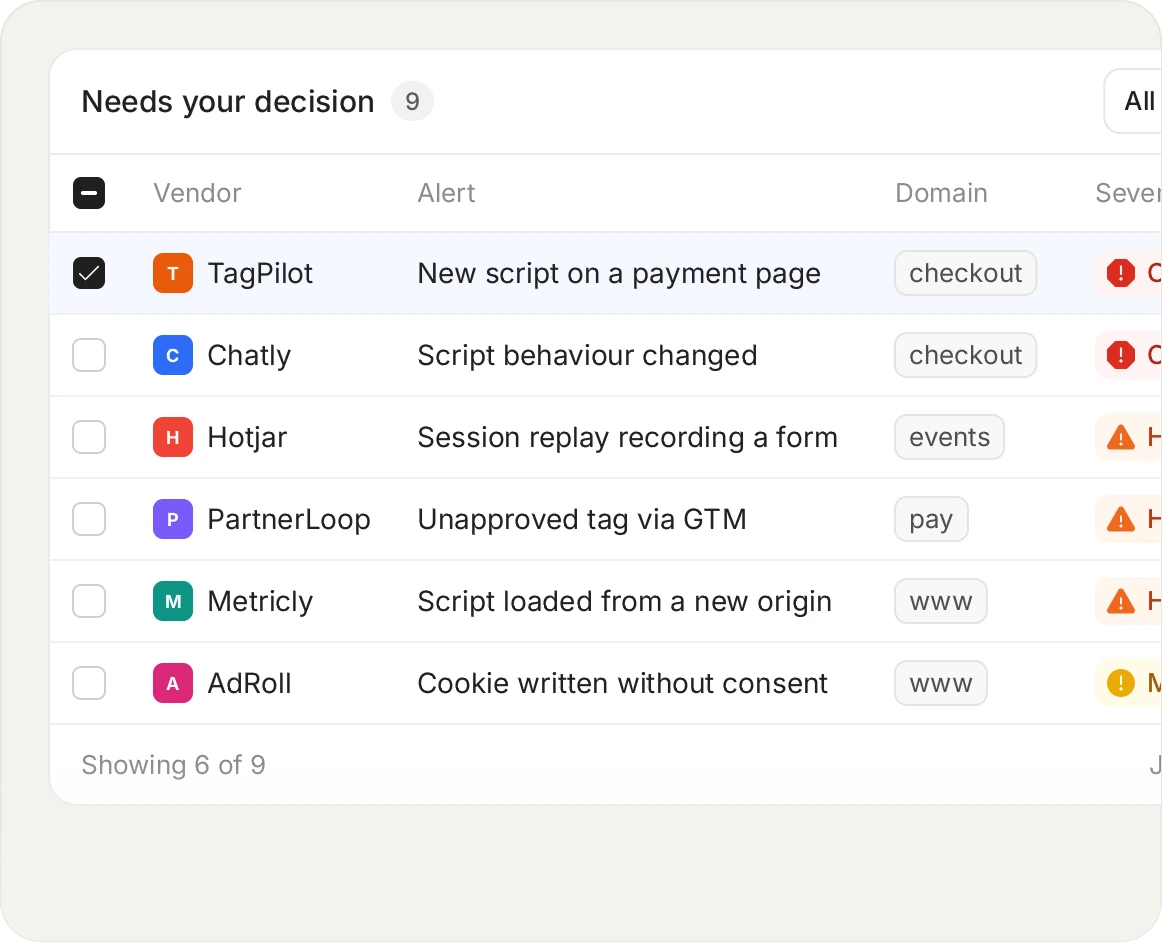
Tuition, housing, parking, catering, alumni giving and event registration are separate systems with separate payment pages, often on separate subdomains.
WHAT THE TAG PRODUCES
A script inventory with justifications, a weekly header change record, runtime blocking, and an evidence pack for your assessor.
Short on time? SAQ A exempts fewer institutions than people assume.
SAQ A and the script requirements
Does higher education need PCI DSS script monitoring?
Yes, if you operate any page where a cardholder enters, reviews or confirms card data, which includes pages that embed a payment iframe. A university is a federation of departments that each built their own payment page, and the compliance obligation lands on one small central team that did not build any of them. Requirements 6.4.3 and 11.6.1 apply to those pages regardless of platform, and have done since 31 March 2025.
Where the exposure is
Tuition, housing, parking, catering, alumni giving and event registration are separate systems with separate payment pages, often on separate subdomains
Departments add analytics and marketing tags without central review, because there has never been a mechanism requiring one
Legacy pages built years ago by staff who have left are still taking cards and still in scope
The central IT or finance team that owns the SAQ has no visibility of what any of those pages actually load
What the inventory shows you
Every script across every departmental payment page, in one inventory, with unlimited domains and subdomains
Marketing and analytics tags added departmentally after the last review
A third-party payment or registration provider shipping changed code, caught by payload hash
Which pages your selector rules treat as payment pages, and which are excluded and why, which is the scope conversation that takes the longest
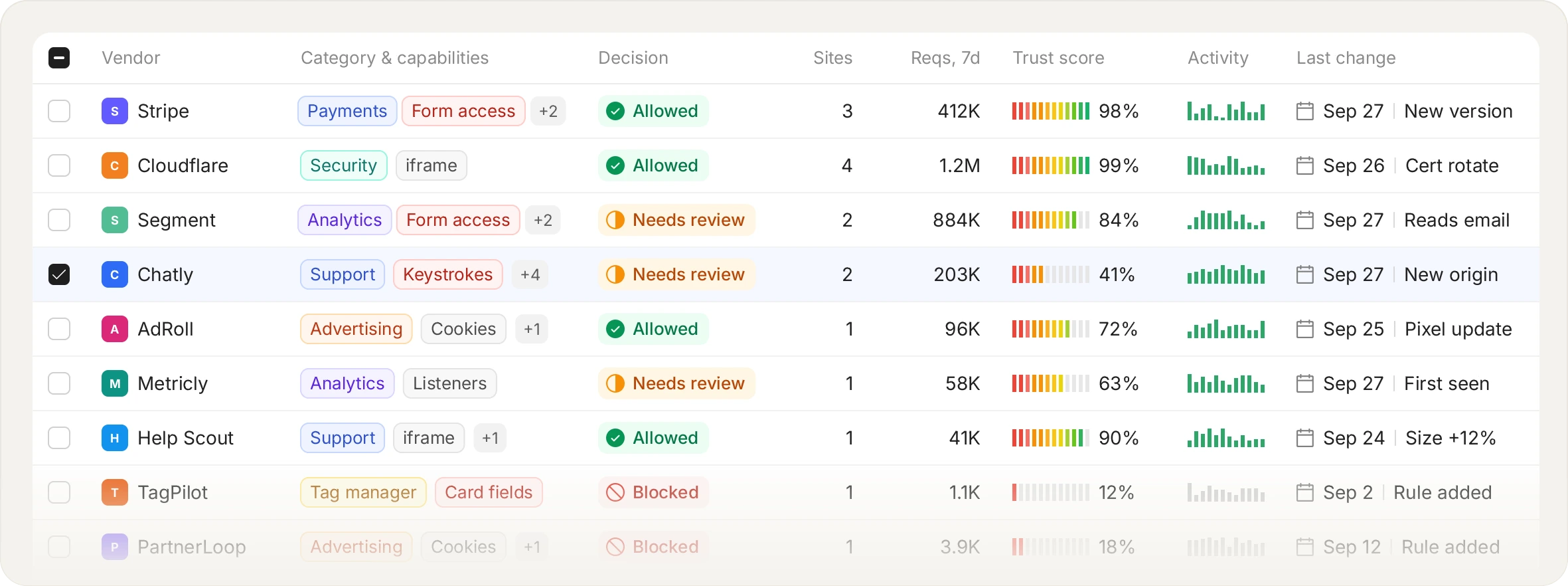
Requirement 6.4.3 is an authorisation record: every script on the payment page, where it came from, and why it is allowed to be there.
The two requirements, in this context
Frequently asked questions
Read the FAQ
More than people expect. PCI compliance higher education scope usually covers tuition and fee payment, housing and meal plans, parking permits, alumni and development giving, conference and event registration, and campus store checkouts. Each is a payment page under 6.4.3 whether or not it sits on the main domain.
Yes, in most cases, and this is the most common misreading. The January 2025 carve-out is narrower than it looks and does not remove the requirement for every merchant using a hosted page. See SAQ A and the script requirements.
Yes, in two stages. Monitoring gives you the record of what was added and when, which is what turns an unenforceable policy into a conversation with evidence. Blocking gives you enforcement when you are ready for it.
No. Domains, subdomains, scripts and users are unlimited on every plan. Page views are the only metered unit.
Yes, through teams under one organisation, each with its own scope, alerting and evidence, while the central team keeps the whole view.
Yes, by CSV import or through the REST API rather than adding pages one at a time. If someone has already compiled the list for a previous assessment, that spreadsheet is the input, and pattern rules cover the subdomains behind it.
This needs unpicking per page. If the page is on your domain, it is your scope even when a vendor built it. If the payment page is entirely on the vendor’s domain, it is theirs, and the page you redirect from may still matter.
Understood, and the free plan is permanent: 1,000 page views a month with both requirements included and no credit card. For most institutions the paid tier that follows is a small line item next to the assessment itself.
A generated pack covering scope, the script inventory with a justification per script, every security-header change with timestamps, and the alerts raised and acknowledged.
See the scripts on your own payment pages.
Free forever on 1,000 page views a month, no credit card. Unlimited domains on every plan.
Free forever plan. No credit card.